“There is now no condemnation for those who are in Christ Jesus.”
— Romans 8:1
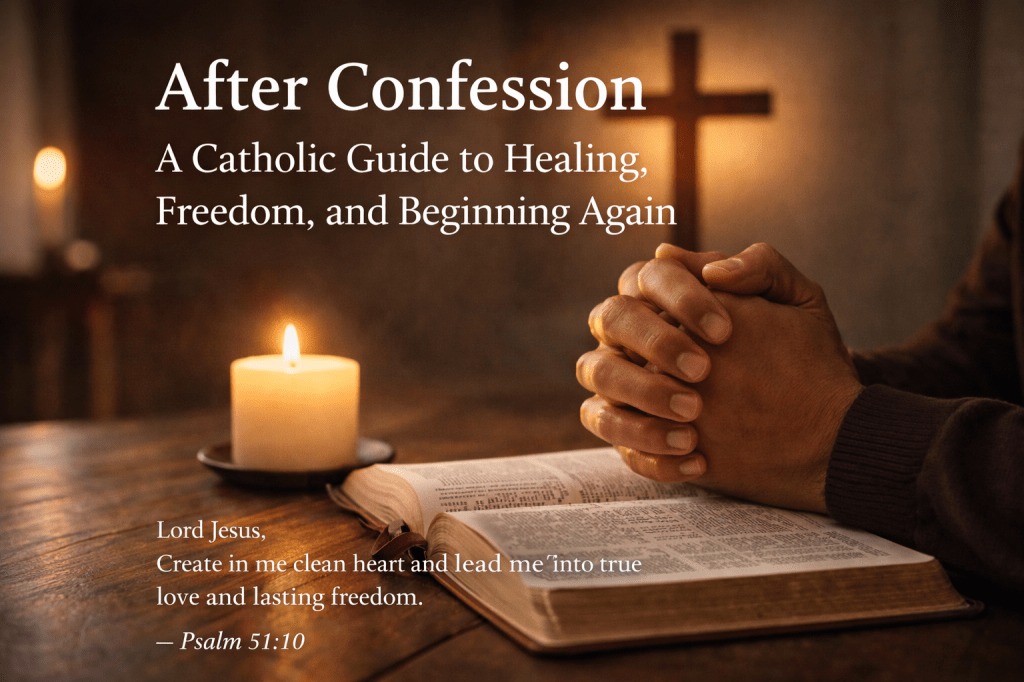
After confession, many people receive absolution yet continue carrying fear, shame, and self-punishment in their hearts. This guide is for those who struggle repeatedly with pornography, masturbation, or other habitual temptations and wish to move from guilt toward healing, truth, and steady spiritual growth.
The Church teaches that these acts are objectively gravely disordered (CCC 2352). At the same time, she wisely reminds us that habit, anxiety, psychological pressure, loneliness, or affective immaturity can reduce personal freedom and culpability.
This is why the journey after confession must be marked not by despair, but by truth, mercy, practical discipline, and hope.
🌿 1) God Has Not Rejected You
You have received forgiveness. Do not continue punishing yourself after confession.
God’s mercy is real.
Your struggle does not cancel His love.
Return again and again to this truth:
“There is now no condemnation for those who are in Christ Jesus.”
Romans 8:1
After absolution, the right response is not fear, but gratitude and renewed trust.
✝️ 2) Is Every Fall a Mortal Sin?
The Church teaches that mortal sin requires:
- grave matter
- full knowledge
- deliberate and free consent
Many people struggle under:
- habit
- loneliness
- emotional exhaustion
- anxiety
- compulsion
- digital overstimulation
These can weaken freedom.
The act remains wrong, but your personal culpability may not always be fully mortal, especially when habit strongly reduces freedom (CCC 2352).
So do not judge your soul harshly.
Speak honestly with your confessor and trust God’s mercy.
🔍 3) Understand Your Pattern
Healing begins with awareness.
Ask yourself gently:
- When do I usually fall?
- What emotion comes first?
- What environment makes it easier?
- Is it late-night phone use?
- boredom?
- loneliness?
- stress?
Write it down.
Awareness weakens temptation.
🌅 4) A Daily Protection Rule
Small routines protect freedom.
Morning
Offer your day:
Lord, guide my thoughts and desires today.
During the day
- stay active
- avoid long idle scrolling
- take breaks from screens
- seek healthy human contact
Night
- no phone in bed
- fixed sleep time
- no isolation with screens
This is practical asceticism.
⚡ 5) When Temptation Begins
Use this 3-step method:
1. NOTICE
I am being tempted.
2. MOVE
Change room, posture, or activity immediately.
3. PRAY
Jesus, stay with me now.
Most temptations weaken within minutes when not fed.
🌿 6) Replace, Don’t Only Resist
Real freedom grows through replacement.
Choose a life-giving substitute:
Spiritual
- Psalm 51
- one decade of Rosary
- Holy Name of Jesus
- sacred music
Physical
- short walk
- stretches
- cold water
- tea
- fresh air
Mental
- message a trusted friend
- read Scripture
- journal
- do a postponed task
The mind and body need a new pathway, not just suppression.
💔 7) If You Fall Again
Do not panic.
Do not spiral into harsh self-accusation.
Instead:
- make an act of contrition
- return calmly to prayer
- plan one positive action immediately
- go to confession regularly, not fearfully
“The Lord is near to the broken-hearted.”
Psalm 34:18
The Christian life is not perfectionism.
It is rising again in grace.
🌱 8) Heal the Deeper Need
Often the temptation hides something deeper:
- loneliness
- stress
- fatigue
- lack of connection
- emotional pain
- need for affirmation
Healing the heart often reduces the behavior.
Seek:
- friendship
- community
- service
- exercise
- healthy routines
- spiritual direction if needed
🙏 9) Prayer for Freedom
Lord Jesus,
You know my weakness and my desire for freedom.
Strengthen me in temptation, give me peace after failure, and teach me to rise again with hope.
Create in me a clean heart and lead me into true love and lasting freedom.
Amen.
✨ Final Hope
“The righteous falls seven times and rises again.”
— Proverbs 24:16
Progress may look like:
- fewer falls
- shorter episodes
- quicker return to God
- less shame
- stronger habits
This is real grace at work.
 Homily & Hope – Fr. Linoose
Leave a comment